Dubai Real Estate Infrastructure Update
Dubai Metro Blue Line Tunnelling Begins: What It Means for Property Buyers and Investors
Sheikh Mohammed has inaugurated tunnelling work for the Dh20.5 billion Dubai Metro Blue Line, a 30-kilometre project scheduled to open on September 9, 2029. For Dubai real estate investors, the line is more than a transport upgrade; it is a major signal for future demand, rental resilience, and infrastructure-led capital growth.
Dubai has taken another decisive step in reshaping its future urban map, with Sheikh Mohammed bin Rashid Al Maktoum inaugurating tunnelling work for the Dubai Metro Blue Line. The Dh20.5 billion project is scheduled to open on September 9, 2029, and is set to become one of the most important transport upgrades for residents, investors, developers, and landlords across the emirate’s eastern growth corridor.
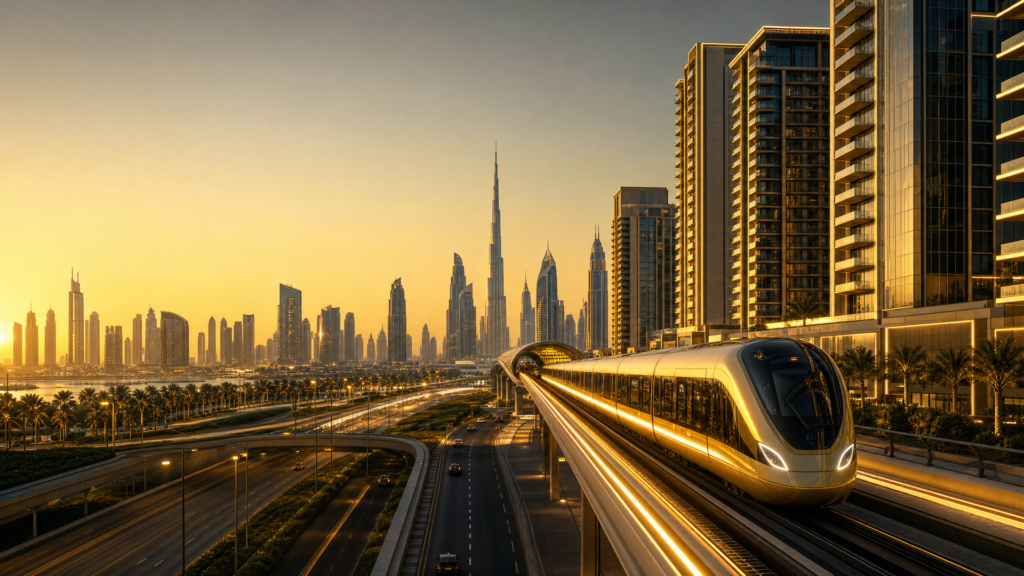
The Blue Line will extend 30 kilometres, with 14.5 kilometres above ground and 15.5 kilometres underground. It will include 14 stations across two routes, linking with the Red Line at Centrepoint Station and the Green Line at Creek Station. For the property market, this is not simply a public transport story. It is a long-term value catalyst for areas that will benefit from faster airport access, reduced congestion, and stronger daily mobility.
Tunnelling Starts from International City 1
Tunnelling has started from the International City 1 Station site using the tunnel boring machine named Al Wugeisha. The machine is 163 metres long, weighs more than 2,000 tonnes, and is expected to advance at an average rate of 13 to 17 metres per day while operating around the clock. The tunnelling works will move in three directions: towards Mirdif, towards the Auto Market, and towards Al Warsan, also known as International City 2.
According to the project timeline, the Blue Line is already 20 per cent complete, with more than 10,000 workers and over 500 engineers and experts involved in delivery. Completion is expected to reach 30 per cent by the end of 2026. The line is expected to reduce traffic congestion on served routes by 20 per cent and connect Dubai International Airport with nine key areas, with travel times ranging between 10 and 25 minutes.
Why the Blue Line Matters for Dubai Real Estate
The strongest real estate impact is likely to be seen in International City, Al Warsan, Mirdif, Dubai Silicon Oasis, Dubai Academic City, and nearby residential communities that currently rely heavily on road transport. Dubai Academic City is projected to serve more than 50,000 university students by 2029, while Dubai Silicon Oasis remains one of the city’s major urban and technology-focused communities. Improved metro access in these areas can support rental demand, increase end-user appeal, and strengthen investor confidence in off-plan and ready properties.
For buyers, the message is clear: infrastructure-led growth remains one of Dubai’s strongest property value drivers. Communities connected to major transport upgrades often become more attractive to tenants, families, students, and professionals because they offer convenience, lower commute friction, and easier access to business and education hubs. For investors, this means the Blue Line should be evaluated not only as a transport project but also as a signal for where future demand may concentrate before the 2029 launch.
Strategic Connectivity Across the City
The project also includes a 1.3-kilometre metro bridge crossing Dubai Creek, the first metro bridge to span the Creek. This adds strategic importance to the network because it strengthens cross-city connectivity and supports Dubai’s broader vision for a more efficient and sustainable urban environment.
With the Dubai Metro Blue Line now moving into active tunnelling, the opportunity for real estate buyers is to monitor communities along the route before the full value of improved connectivity is priced in. For investors looking at long-term rental demand, capital appreciation, and liquidity, the Blue Line corridor should be treated as one of Dubai’s most important infrastructure-driven investment zones leading up to 2029.
Source: Based on details reported by Khaleej Times, adapted with investor-focused real estate analysis.